What happens after the KCPA passes?
We examine the statutes, enforcement mechanisms, laboratory problems, changing product chemistry and public-health record state by state. The question is not what a KCPA promises on paper. It is whether the law actually controls the market it leaves in commerce.
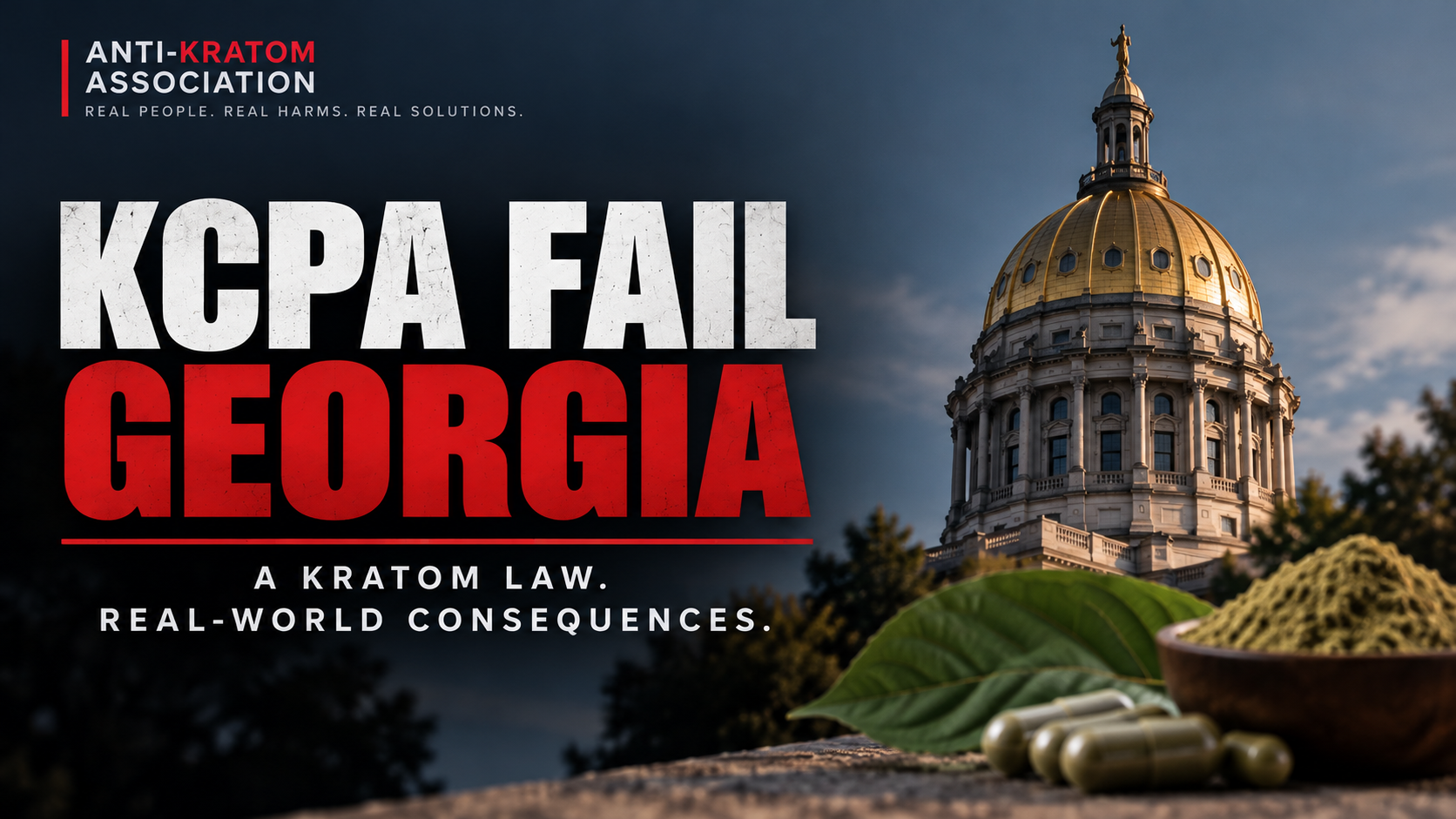
Four Deaths. 315 Calls. Rick Townsend Warned Georgia.
Rep. Rick Townsend tried to schedule kratom in 2023. The AKA and Georgia Council for Recovery opposed the original ban. Georgia chose regulation instead. Now WSB-TV reports four deaths, 315 Poison Center calls and prohibited synthetic kratom products still being sold. Townsend warned about the dangers. Three years later, Georgia is still trying to control the market.
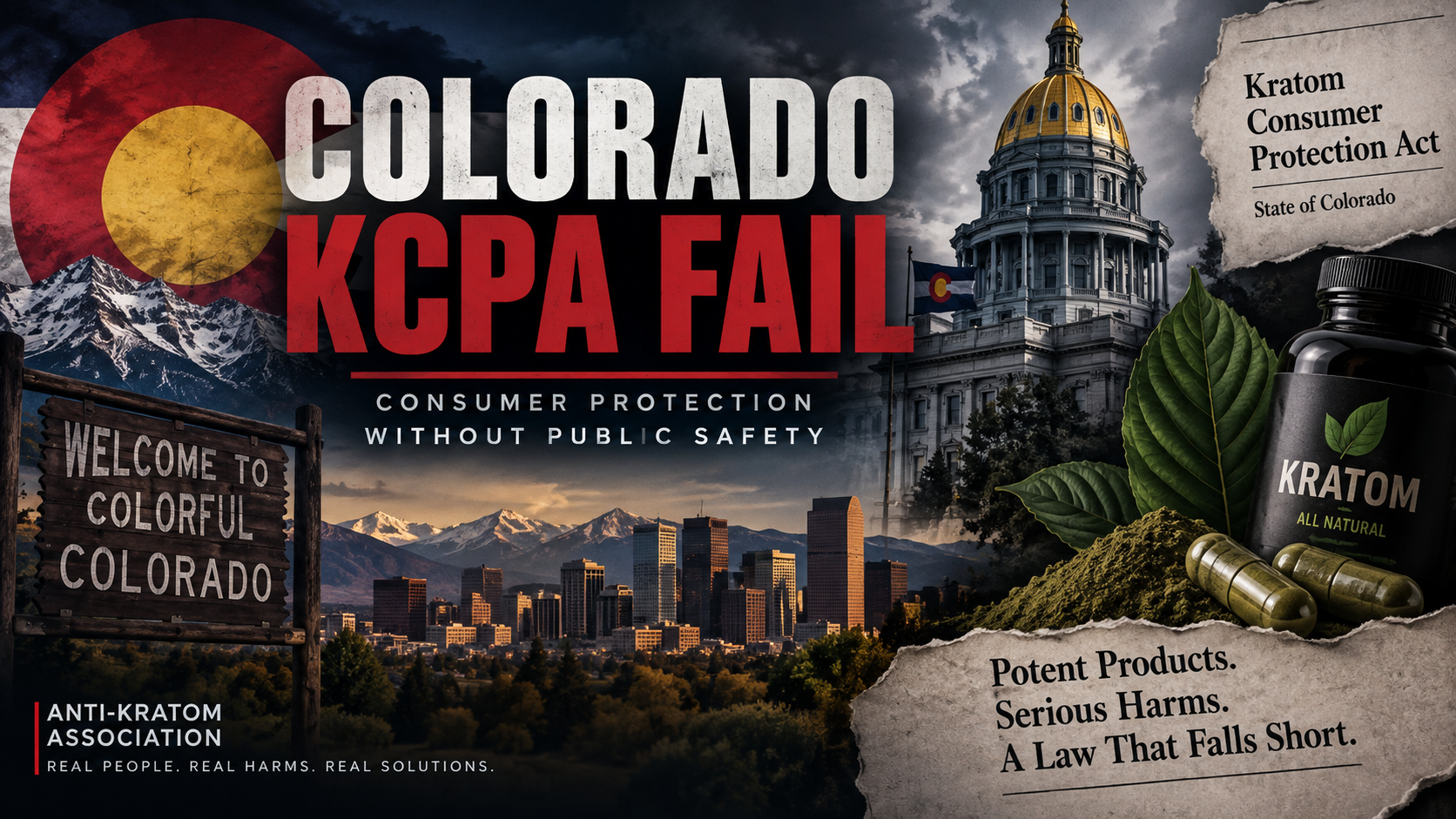
Colorado Regulated Kratom. A 19-Year-Old Died Anyway.
Governor Jared Polis signed SB25-072, strengthening Colorado's kratom regulations while keeping qualifying products legal. In 2026, 19-year-old Masen Campbell died from kratom toxicity involving alcohol, with 7-OH detected. Colorado's medical examiner also reported 41 kratom-associated deaths in 2025. Four legislators sponsored the new protections. Now comes the harder question: what did the law actually prevent?
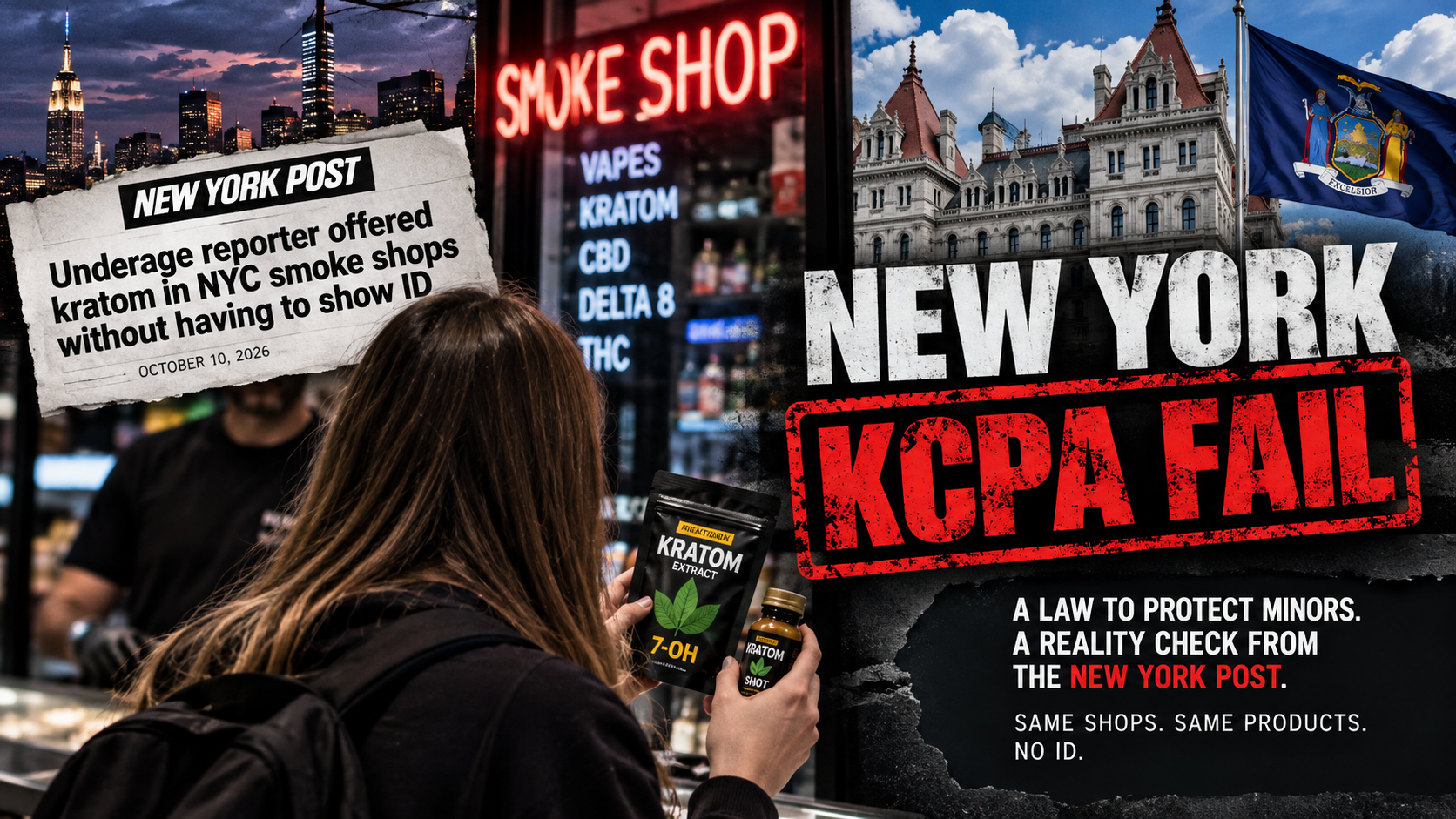
New York Passed a Kratom Law. The Smoke Shops Got a Sidewalk.
Governor Hochul called it landmark protection. A New York Post investigation sent a 20-year-old reporter into 18 Manhattan smoke shops. Half never asked for ID. Four lawmakers celebrated the legislation. The state has yet to show whether its enforcement matches its promises. Albany built the barrier. The industry got a sidewalk.
A Fatal Crash. A Positive Kratom Test. A Legal Blind Spot.
A Tampa driver admitted taking kratom. Blood testing confirmed mitragynine. Jessica Barr died after being struck at a bus station. Prosecutors dropped the DUI charges and pursued vehicular homicide. Florida regulates the kratom consumer. Who protects everyone else?
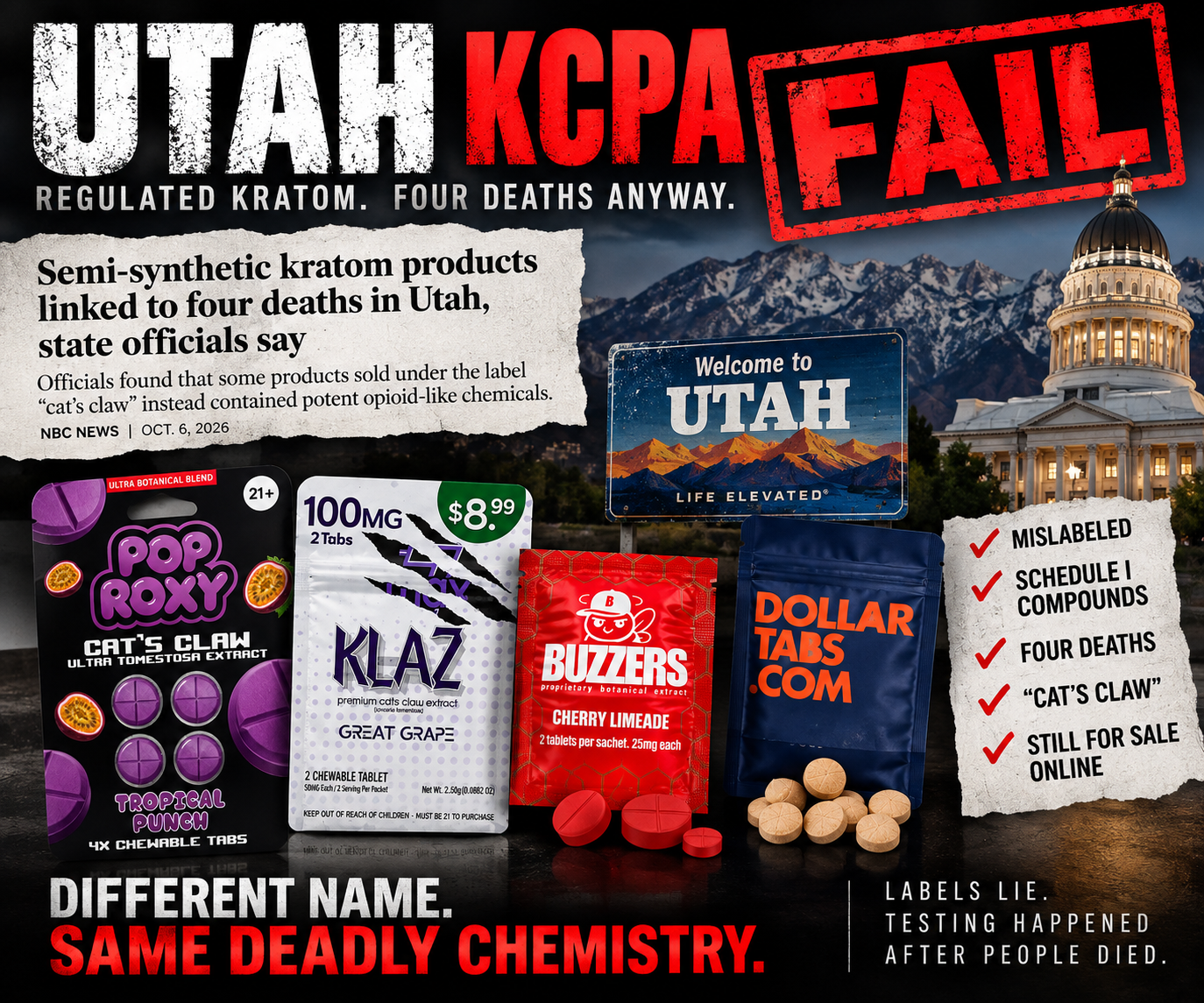
Four Deaths. Then They Tested the Products.
Utah passed the nation's first KCPA. Seven years later, officials linked four deaths to potent semi-synthetic kratom compounds and found Schedule I substances in products labeled “cat's claw.” A law can ban the molecule. It still has to find it.
Nine Deaths Later, What Exactly Did Florida Fix?
Florida regulated kratom, declared concentrated 7-OH an emergency, revised its chemical threshold and seized thousands of products. Northwest Florida sheriffs are still reporting deaths—and law enforcement is still developing a field test.
Ban the Molecules. Keep the Source Material?
Oklahoma proposes Schedule I controls for 7-OH, mitragynine pseudoindoxyl and MGM-15 while leaving kratom and its upstream mitragynine supply chain in legal commerce.
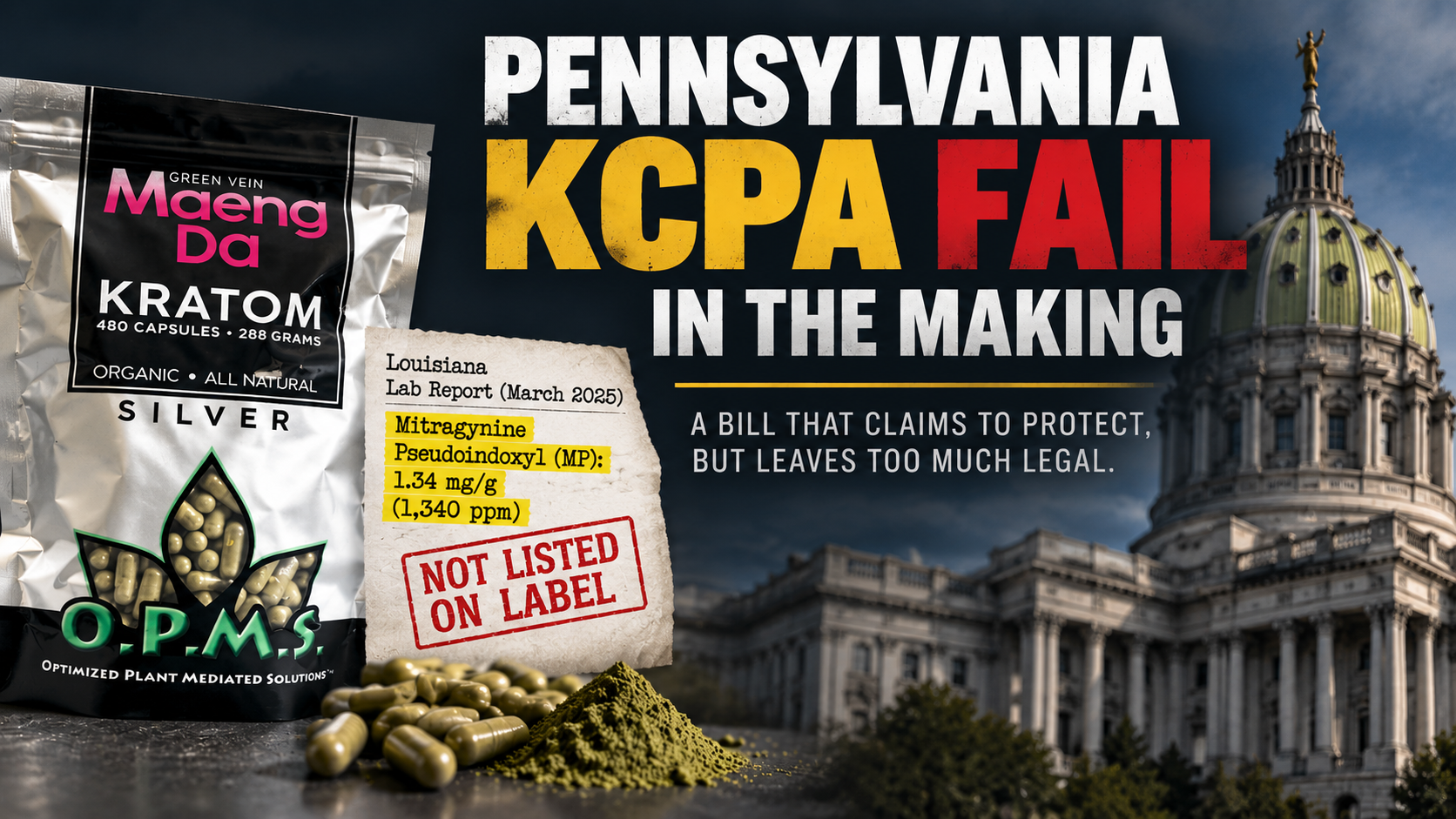
A KCPA Fail in the Making?
Pennsylvania can write “natural,” “synthetic” and chemical thresholds into law. The harder question is who inspects the shelves, takes the samples and proves which side of those lines a product actually falls on.
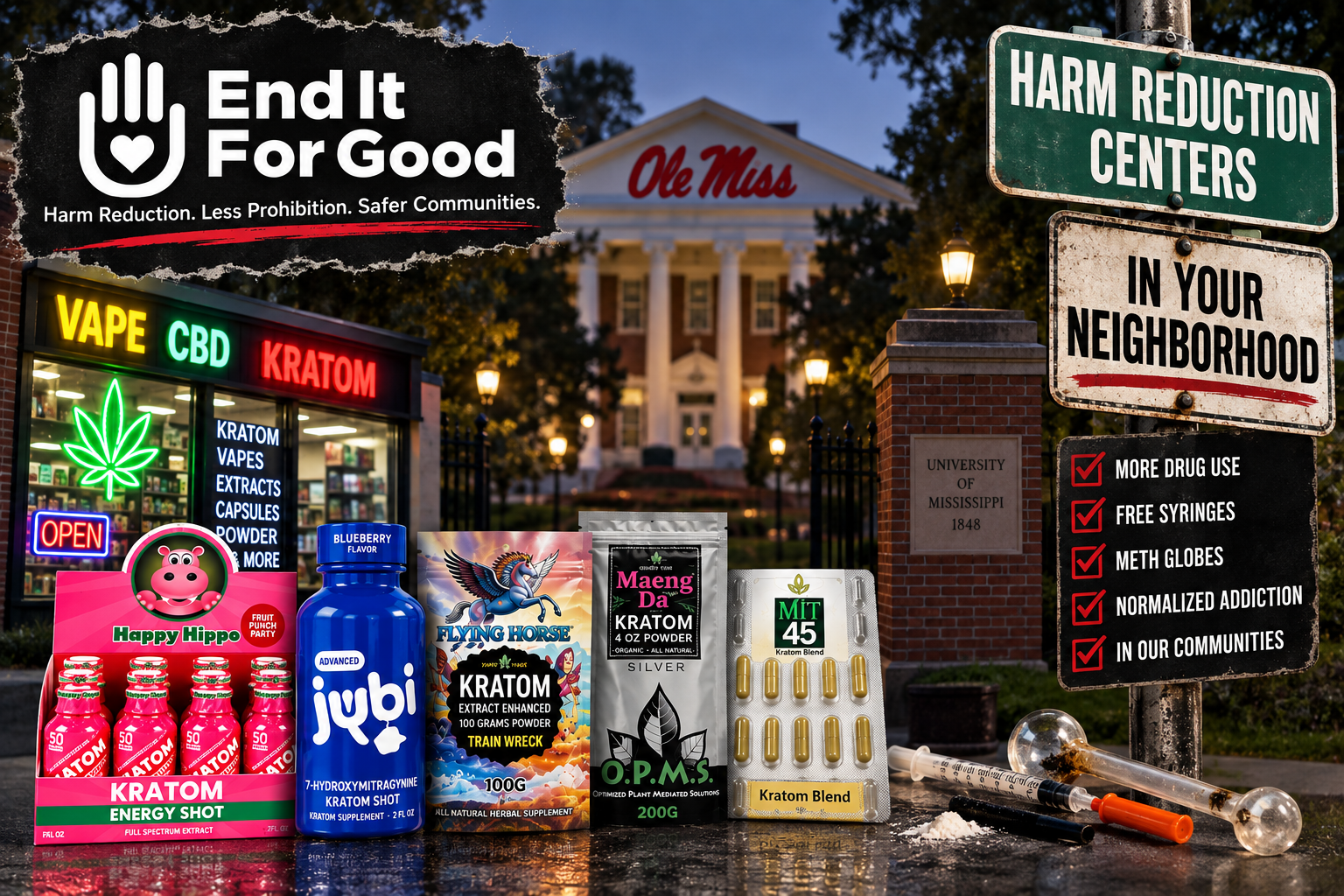
The Regulation Victory Law Enforcement Didn't Ask For
Mississippi's fight over prohibition became another test of the KCPA model: what lawmakers call consumer protection can look very different to the officials expected to deal with the products afterward.
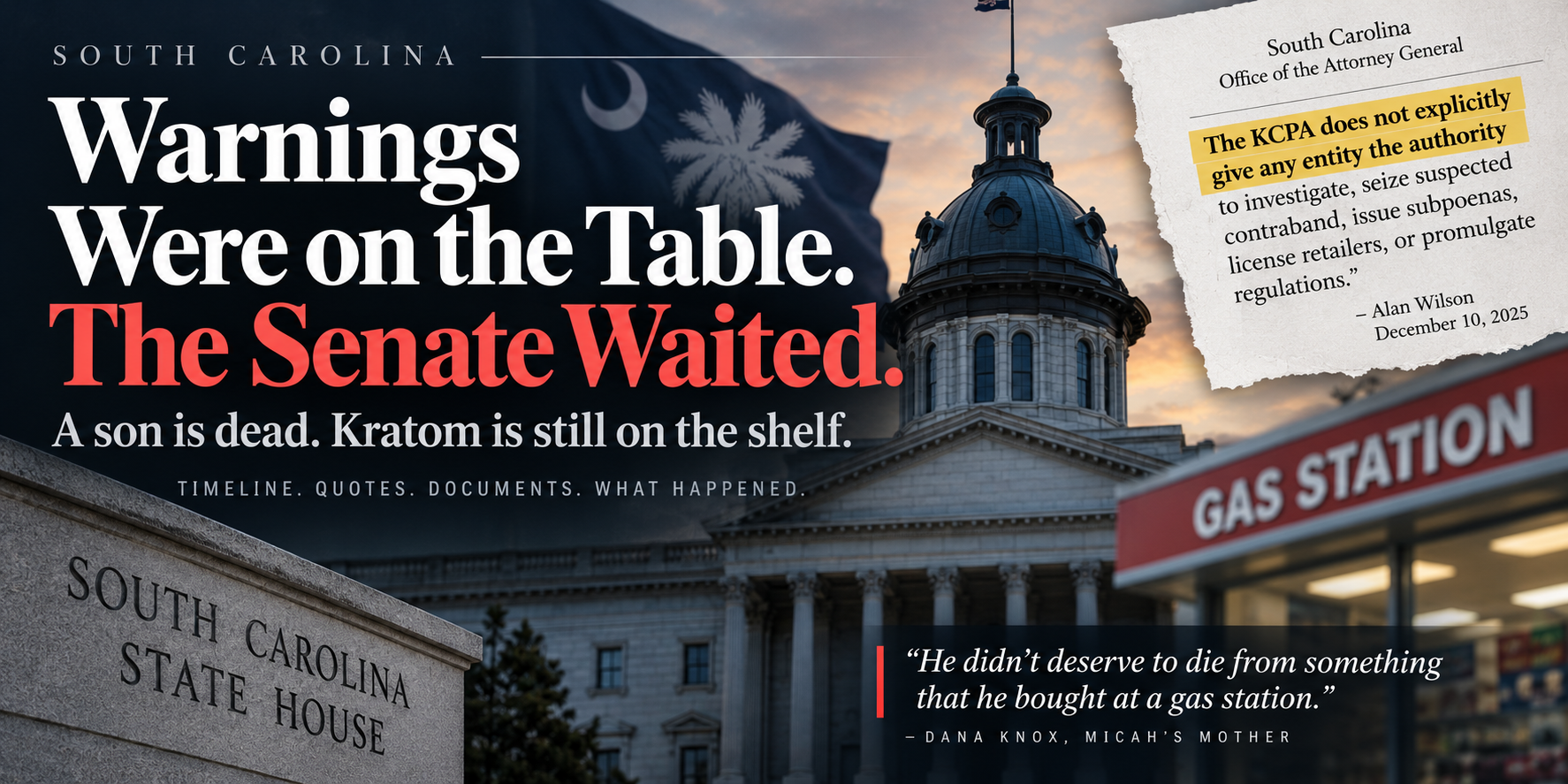
When a Ban Becomes a KCPA
South Carolina's legislative record shows how a proposal aimed at controlling kratom can be transformed into a regulatory framework that keeps the market alive.
What Happens After the Compromise?
The second part follows the enforcement and policy questions left behind after lawmakers choose regulation over prohibition.
The standard is simple.
A consumer-protection law should be judged by what it prevents, what it detects and what it gives regulators and law enforcement the practical ability to stop—not by the title printed across the top of the bill.