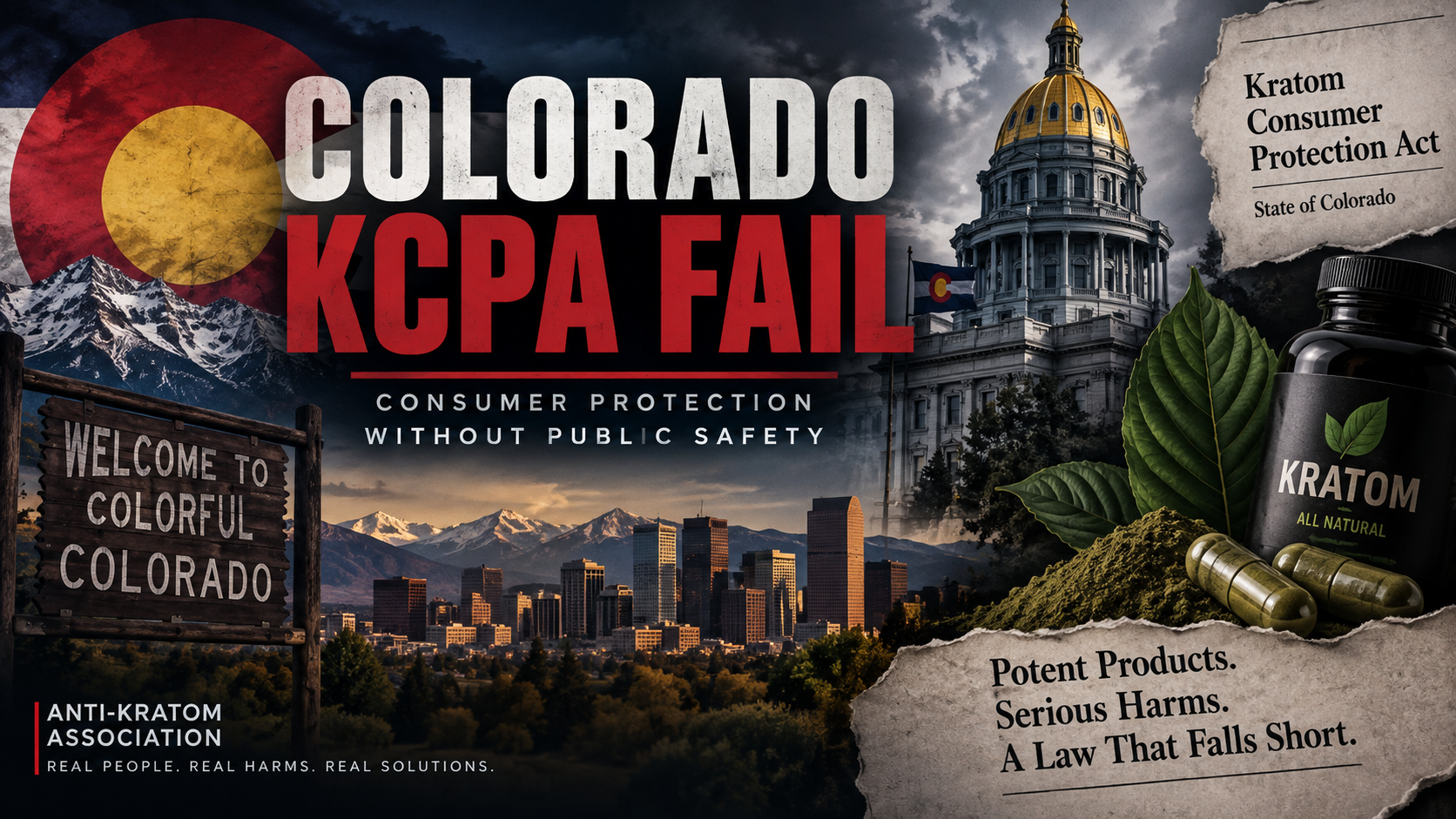
Colorado strengthened its kratom regulations in 2025. In October 2026, KOAA reported that Masen Campbell, 19, died after taking kratom reportedly supplied by a friend. His mother said an autopsy identified kratom toxicity involving alcohol and detected 7-OH.
What KOAA Reported About Masen Campbell
Masen played football at Severance High School and was preparing to continue his athletic career at Feather River College in California. His mother, Ashley Campbell, described a loving son and older brother. According to her account to KOAA News5, a friend gave him kratom before his death on May 31.
She described unusual snoring before he was found unresponsive. His sister attempted CPR. His mother reported that naloxone did not revive him. Ashley said the autopsy identified kratom toxicity and that kratom combined with alcohol caused his death. The report also says 7-hydroxymitragynine (7-OH) was detected.
What Colorado Actually Passed
SB25-072, signed by Governor Jared Polis on May 29, 2025, strengthened Colorado's kratom rules. It restricts sales to people under 21, prohibits candy-like and vaping products, requires detailed labels, restricts synthesized and semi-synthesized alkaloids, and establishes a 2% maximum 7-OH share of the alkaloid composition for covered products.
Violations are treated as deceptive trade practices under Colorado consumer-protection law. Those are meaningful legal restrictions. But the legislation also preserves lawful commerce in qualifying kratom leaf, extracts and products. It regulates the market rather than ending it.
The Lawmakers Behind SB25-072
Colorado's legislative record names four prime sponsors. They should be asked to evaluate the results of the law they championed, not presumed to have intended any harm.




Governor Jared Polis signed the legislation. Colorado had previously regulated kratom under SB22-120, sponsored by Senators Don Coram and Joann Ginal and Representative Tom Sullivan. The 2025 measure expanded that framework rather than imposing a comprehensive ban.
What the Medical Examiner Reported
El Paso County Coroner and Chief Medical Examiner Dr. Emily Russell-Kinsley told KOAA that 41 Colorado deaths in 2025 were associated with kratom or mitragynine products. That number is not a count of deaths caused solely by kratom, and it should not be described as one.
Russell-Kinsley distinguished the relatively lower overdose risk of pure kratom or mitragynine from the increased danger of products containing additional alkaloids such as concentrated 7-OH. The reporting does not identify the complete formulation or legal compliance status of the pink pill reportedly given to Masen.
Did the New Law Fail This Particular Case?
We cannot establish that from the news report. We do not know whether the product was sold in Colorado, whether it exceeded the 2% threshold, whether it was synthesized or semi-synthesized, or whether any retailer violated the statute. Masen's death alone does not prove a violation of SB25-072.
But the broader question remains legitimate: does regulating a legal kratom market sufficiently protect the public from overdose, combinations with alcohol, unpredictable formulations and product misuse? Colorado should answer with enforcement records, testing data and measurable outcomes, not merely the existence of a statute.
Five Questions for Colorado
1. How many kratom products have been independently tested since SB25-072 took effect?
2. How many retailers or manufacturers have been investigated or penalized?
3. How does the state verify the 2% 7-OH limit and identify chemically modified alkaloids?
4. How many deaths involved products demonstrably compliant with Colorado law?
5. Will the sponsors publicly review the law's performance in light of the medical examiner's findings?
The Family Is Asking for Further Action
Ashley has shared her family's story publicly and with U.S. Representative Lauren Boebert's staff, according to KOAA. That outreach is not evidence that Boebert sponsored or enacted SB25-072, a state law. It shows a mother seeking action beyond the regulatory system already in place.
Primary reporting and legislative record
Colorado General Assembly — SB25-072, enacted May 29, 2025; sponsors and bill history
Colorado General Assembly — SB22-120, 2022 kratom regulatory framework
Colorado Revised Statutes — 2025 kratom consumer-protection provisions
KOAA reports the mother's account of the autopsy and product history. No original autopsy, laboratory report or product certificate of analysis was independently examined for this article. The 41 deaths are associations, not necessarily single-substance fatalities.